

The Argentine businessman is moving forward with a stake in the future free-to-air television channel “La Séptima,” as part of a broad media expansion across Latin America and Europe.
Argentine businessman José Luis Manzano is advancing his media expansion strategy with a potential equity stake in the project for a future free-to-air television channel provisionally known as “La Séptima,” in Spain. The move would confirm the European entry of Grupo América, Argentina’s second-largest media conglomerate after Grupo Clarín.
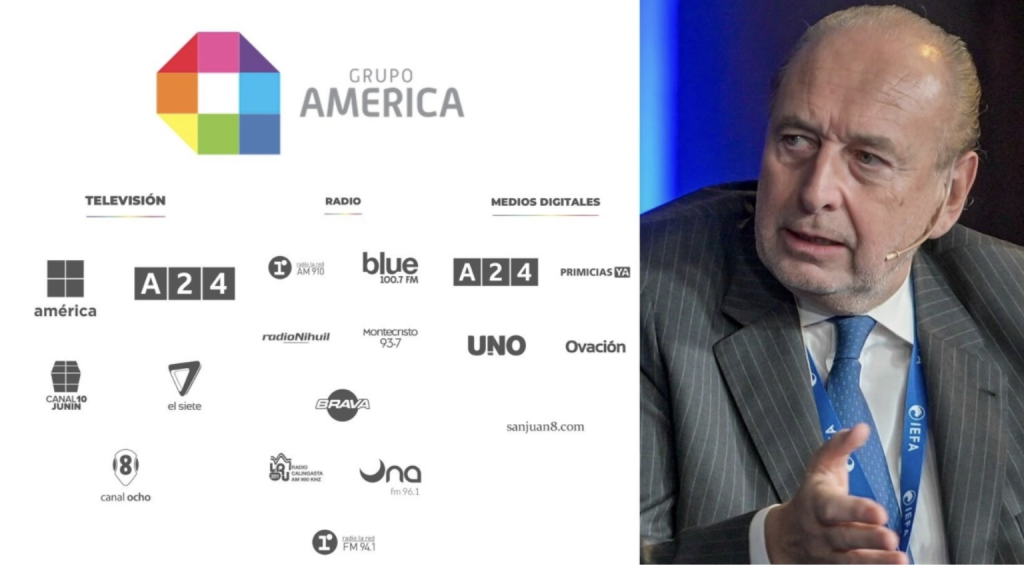
While in Europe his name is usually associated with his investments in energy, infrastructure, and telecommunications, Manzano is also one of the leading figures in Argentina’s media sector. Through his stake in Grupo América, alongside his partners, he controls a conglomerate spanning free-to-air television, news channels, radio, financial press, and digital platforms, with a potential audience reach of more than 25 million people.
Over the past twelve months, Manzano has led one of the region’s most significant business expansions, concentrated in media, energy, and telecommunications. In October 2025, together with his longtime partners Daniel Vila and Gustavo Scaglione, he completed the acquisition of Telefé, Argentina’s leading television channel in audience share, adding it to an ecosystem that already included América TV, A24, Radio La Red, and El Cronista, among other outlets.
In February 2026, he expanded his publishing presence with the acquisition of El Universo, one of Ecuador’s and Latin America’s leading newspapers. These deals followed recent energy-sector acquisitions through Integra Capital, including the purchase of Shell Argentina’s assets alongside Mercuria, further establishing Manzano as one of the region’s most influential business figures in both economic and media terms.
Industry sources note that the business model Manzano has pursued in Argentina has been characterized more by a market-driven approach than an ideological one, combining editorial plurality with profitability and institutional influence. That same approach appears to be carrying over to the Spanish project, where, according to reports, the future channel would be built on principles of democratic values, freedom, and a market economy, without centralized editorial control and with a pluralistic, non-partisan focus.
According to sources in the audiovisual market, Manzano’s involvement in this television project could be the first step in a broader media investment strategy in Spain, where he is said to already be in contact with producers and publishers as part of a short-term expansion plan.
With a track record spanning institutional experience, energy, telecommunications, and media, Manzano reinforces his profile as one of the investors most skilled at identifying sectors in transformation, now adding the Spanish market as a new area of growth within his international strategy.
Source: Dircomfidencial
